
Picture a typical residence hall in October. Roommates, neighbors, the RA, the floor group chat, and the people you end up grabbing dinner with. All of this exists because on-campus housing gives students a ready-made community, and everyone in it gets some support just by living there.
Now look at who actually fills your enrollment. Federal data from the National Postsecondary Student Aid Study puts only 15.6% of US undergraduates in campus housing. The rest live off campus, either on their own or with roommates (56.9%) or with parents and family (27.5%).
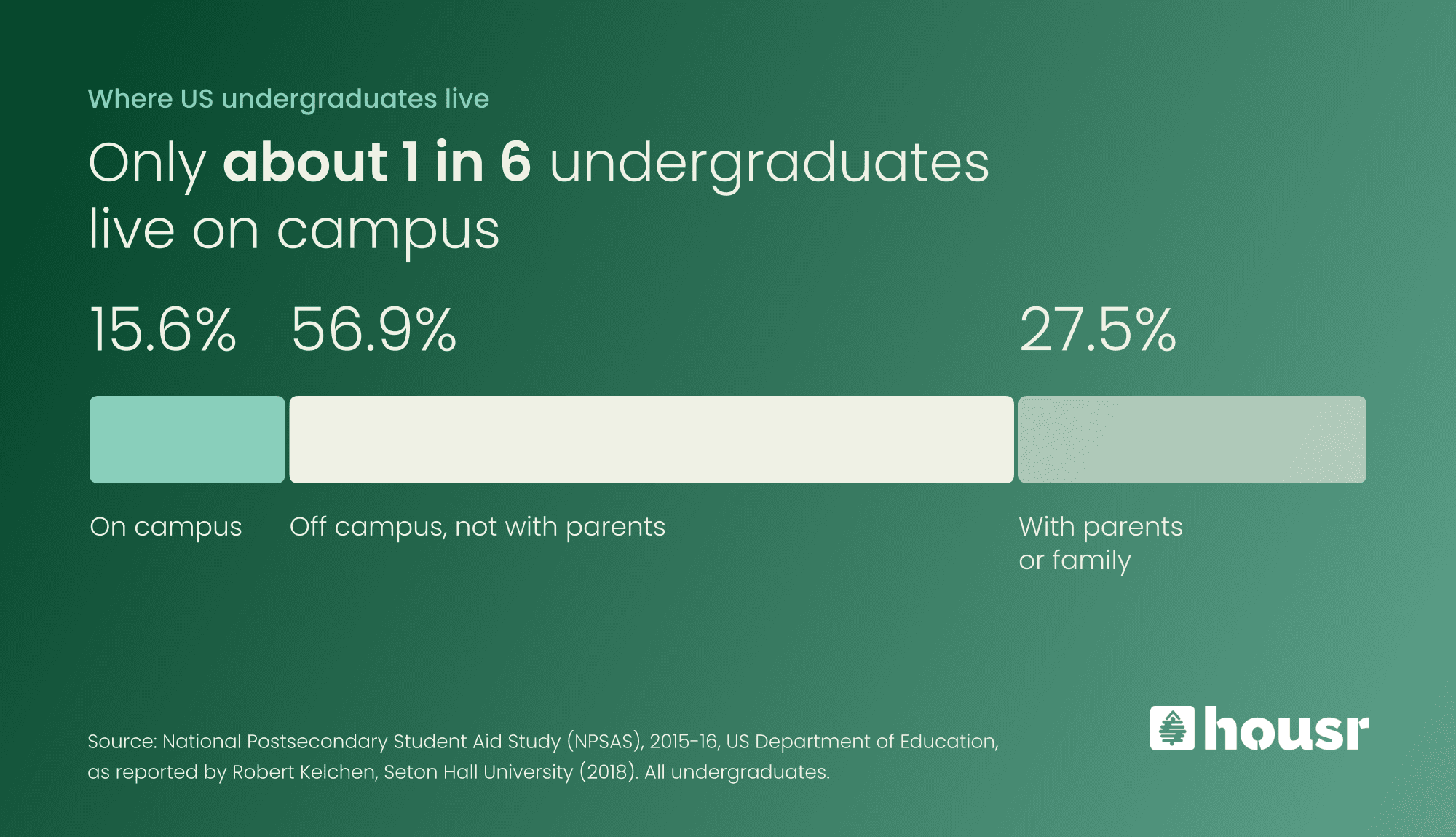
Source: National Postsecondary Student Aid Study 2015-16, as reported by Robert Kelchen, Seton Hall University. All undergraduates.
In other words, the students with the fewest built-in chances to connect make up the majority of your student population. They're also the group your campus data tends to see least.
This post walks through why off-campus students drift, why that matters for retention, what a few schools are doing about it, and a short audit you can take into your next planning meeting.
Why do off-campus students feel disconnected from campus?
Think about a sophomore who moved into an apartment 25 minutes from campus this fall. Last year she lived in a residence hall, and getting to a 7pm club meeting meant walking downstairs. This year her last class ends at 2pm and the meeting is still at 7pm. She can wait around campus for five hours, or she can go home and decide later whether it's worth the drive back. Most weeks she goes home, and most weeks she stays there.
Her week has stopped putting her in the same room as the same people. In the residence hall, those repeat encounters happened without any effort: the same hallway every morning and the same dining hall every night. Off campus, every connection takes a plan and a drive, and it's easy to skip both.
And that's a student whose only obstacle is distance. Plenty of students have more on their plate. Federal data shows that 40% of full-time undergraduates held a job in 2020. At a New York City college where 98% of students live off campus, Angela Marinilli Pinto and colleagues surveyed 576 students and found almost half were working while enrolled. More than half reported poor sleep or screened positive for depression.
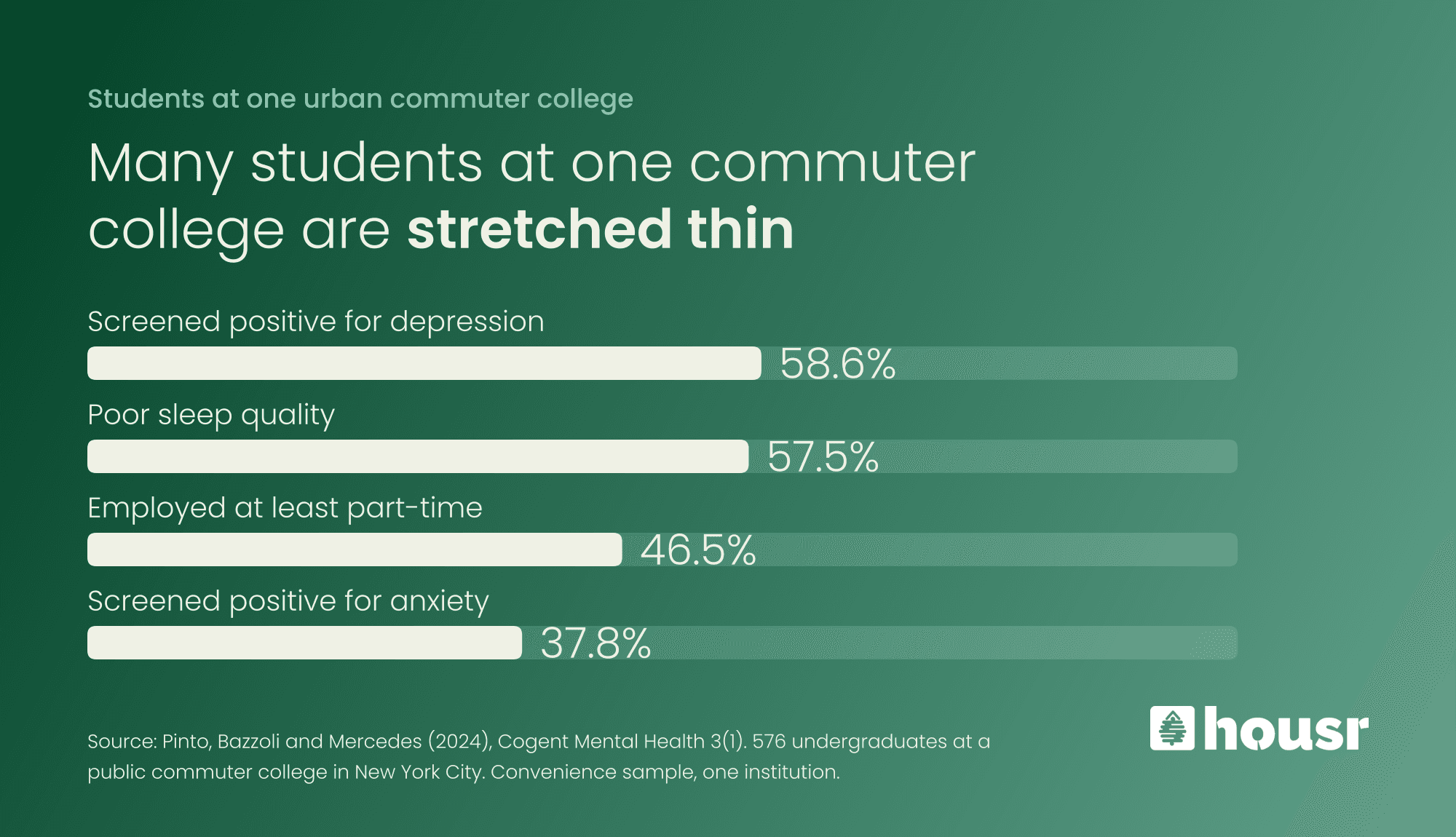
Source: Pinto, Bazzoli and Mercedes (2024), Cogent Mental Health. 576 undergraduates at one public commuter college in New York City. Convenience sample.
It's one college, so treat it as a snapshot rather than a national rate. But it shows how much is competing for the few hours an off-campus student actually spends on campus.
The data shows that students' sense of belonging directly impacts retention, and the evidence is strong
Students who feel they belong are more likely to stay enrolled, and the best evidence for that is national. Maithreyi Gopalan and Shannon Brady followed a nationally representative group of students who started college in 2011-12. At four-year schools, each one-point rise in first-year belonging on a five-point scale went with about a two-percentage-point higher chance of still being enrolled in each of the next two years. Those students also used more campus services and reported better mental health. That study shows a link. The cause-and-effect evidence comes from an experiment.
The same experiment shows that a school can raise students' sense of belonging without a big program. In 2023, Stanford psychologist Gregory Walton and a team of researchers tested a short online exercise with nearly 27,000 incoming students at 22 colleges. Before they arrived, students read stories from older students about how worries over fitting in are normal and ease with time. The whole thing took under 30 minutes. Among groups of students who had historically been less likely to finish their first year at their school, the share who completed the year as full-time students rose by about two percentage points.
There was one condition, and it's the part that matters most for your team. The exercise only worked at colleges where students actually had real chances to connect once they arrived. A message about belonging can't do much on its own. Someone has to build the places, programs and relationships that give off-campus students a way in.
Where students live changes how they belong
Off campus, roommates are usually the people a student sees most, so the roommate match matters more than it looks. A study of more than 17,000 students at 44 colleges found that students living with roommates reported a stronger sense of belonging with their peers than students living alone.
Get the match right and that roommate ends up doing a fair bit of what a residence hall floor would have done. They're the person who drags you to the intramural game or notices you haven't left your room all weekend. Get it wrong and you'll probably hear about it by October, in the form of a mid-semester move, a broken lease, or a student who quietly stops coming to class.
So roommate fit deserves more planning than it usually gets. It's the reason we built Housr Roomie, the roommate matching inside the Housr app, which pairs verified students from the same school by lifestyle and preferences. For the part after move-in, when the dishes start piling up, there's our guide to living well with roommates.
Housing problems wear belonging down fast
Try feeling connected to campus while you're chasing a landlord who won't call back. Or coming up short on rent. Or realizing the listing you put a deposit on was never real.
This happens far more often than most campus leaders assume. In The Hope Center's 2023-2024 survey of 74,350 students at 91 colleges, nearly half had experienced housing insecurity in the past year.
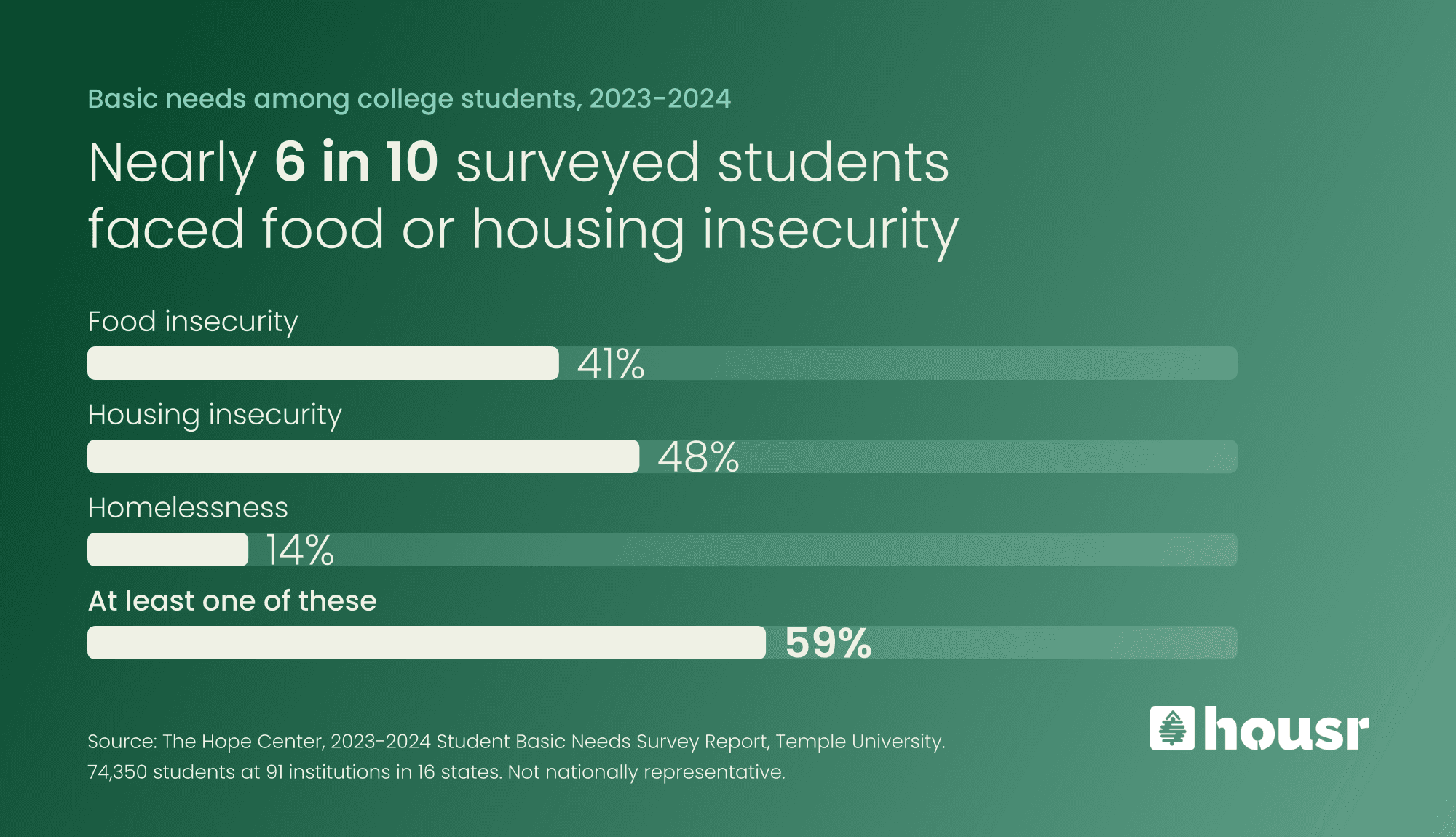
Source: The Hope Center 2023-2024 Student Basic Needs Survey, Temple University. 74,350 respondents at 91 institutions; not nationally representative.
A student who's worried about where they'll live next month isn't going to the welcome week barbecue. A lot of that stress starts during the housing search itself, which is why a safer search does real work for belonging. On Housr's verified off-campus housing search, every student is verified against their school's enrollment records and every property partner is vetted by Housr. Students message landlords in the app, and issues can be escalated to the school's housing team. Our checklist of what to look for before signing a lease, our guide to vetting off-campus housing and landlords and Housr's Family Service for parents add more support around the search.
Programs that work for commuter and off-campus students
Plenty of schools have already figured out pieces of this. The four programs below take different approaches, but each one solves the same problem from our sophomore's week: they give off-campus students a reason to see the same people again and again.
University of Minnesota: Commuter Success Program
Every fall, the University of Minnesota picks 85 incoming first-year commuters for its Commuter Success Program. Students are split into pods of 10 to 15, and each pod is led by a returning commuter. The lead checks in with every student one-on-one once a month and hosts shared meals, and each student gets $450 in dining dollars per semester to make eating on campus easy.
The meal money is the clever part. Lunch is something a commuter does every day anyway, so the program turns it into a standing reason to sit with the same 10 people. By October, those faces are familiar, and the student has an older commuter to ask about everything orientation didn't cover.
Pitt-Greensburg: Commuter Mentor Program
At the University of Pittsburgh at Greensburg, every new first-year and transfer commuter is matched with an upper-class commuter mentor before the semester starts. The mentor reaches out by email ahead of the first week, then checks in weekly by text or email, with optional coffee, lunch or event meetups.
What we like here is the timing. On day one, a new commuter already has a name and a face to look for. And it gets used: Pitt-Greensburg says more than 75% of students interacted with their mentor last year, which is a lot for a group this hard to reach.
UMBC: Good Morning Commuters
UMBC's Commuter Connections team runs Good Morning Commuters, a breakfast every Tuesday from 8:30 to 10:30am, plus a monthly lunch version. A Commuter Gold Card costs commuters $5 for the whole year and covers the food.
Breakfast is smart because commuters are already on campus at 9am. Nobody has to drive back at night. And since it happens every Tuesday, regulars start to recognize each other, and staff from other campus offices stop by too. A student who comes for a free bagel leaves knowing a few classmates and at least one person in student affairs by name.
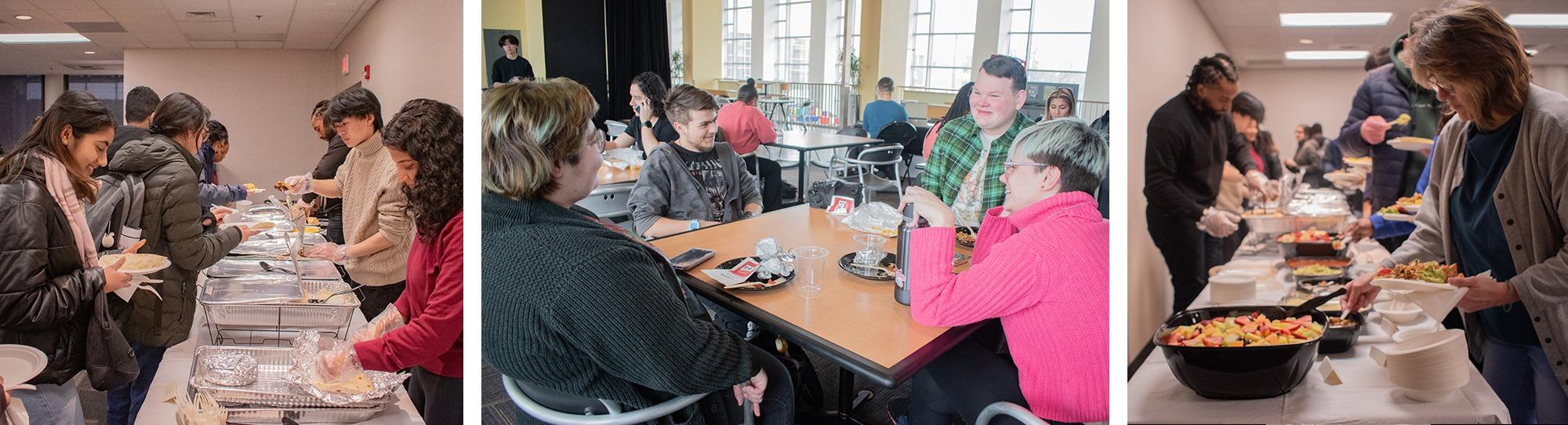
Good Morning Commuters at UMBC. Photo: UMBC Commuter Connections.
University of New Haven: a commuter lounge built by students
This one came from students. Darby Brown, then student government president at the University of New Haven, spent about a year and a half pushing for a proper commuter lounge, and student government ended up paying for the renovation out of its reserves. It opened in 2024 near Maxcy and Gehring halls, and the school's commuter assistants now work out of it.
One commuter assistant, Kayla Batista, said the old lounge was "quiet and didn't feel like a place to stay." The new one fills up. A place to land between classes sounds basic. For a student with five hours to fill between a 2pm class and a 7pm meeting, it decides whether she goes home or stays on campus.
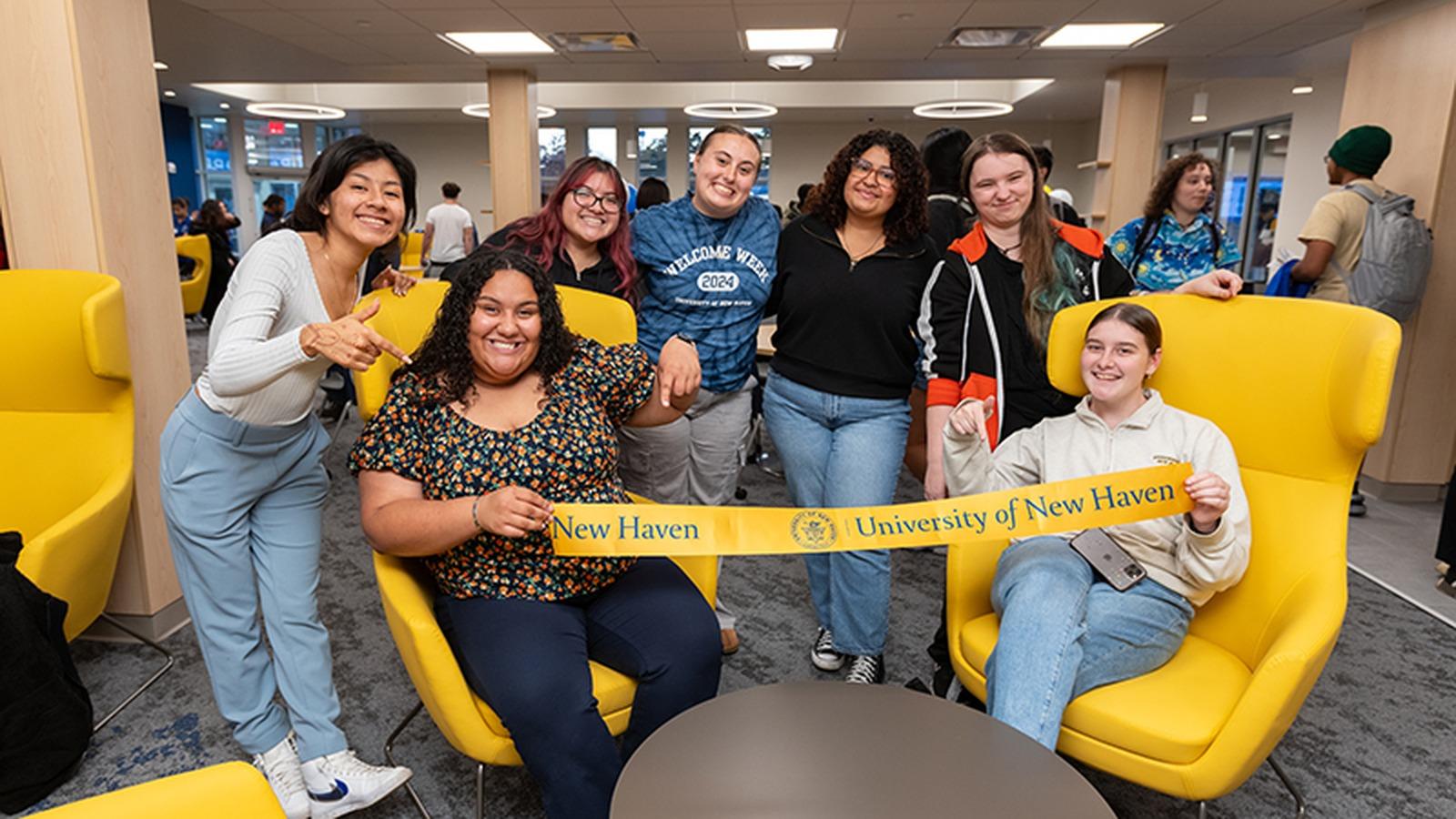
Students in the new undergraduate commuter lounge. Photo: University of New Haven.
None of these ideas is complicated. Each one picks a moment when commuters are already on campus and builds a routine around it. That's the approach worth borrowing, whatever your budget.
A four-step off-campus belonging audit
Here's a short plan to take into your next planning meeting.
Find out how off-campus students are actually doing. Most campuses report retention and engagement for the whole class, which hides off-campus students inside the average. Break those numbers out by where students live. If your team hasn't done that before, start there. Our step-by-step guide on how to track retention by where students live walks through it.
Give off-campus students at least one structured way to meet the same people every week. That could be a commuter cohort like Minnesota's, a mentor program like Pitt-Greensburg's, or supported roommate matching. Pick one and run it well before you add more.
Walk a commuter's week yourself. Check when your events are scheduled, where a student can sit between classes, and what the off-campus housing search looks like on a student's phone. Fix the gaps you find.
Ask off-campus students what's missing, then change something. A short survey each term is enough, as long as students can see that their answers led to a real change.
Frequently asked questions
Why do off-campus students feel less sense of belonging?
Mostly because they spend less time on campus. Fewer hours there means fewer chance conversations, and many off-campus students are also working, commuting or dealing with housing problems on their own. Research on commuter students links that to lower involvement and a weaker sense of belonging.
How do you measure sense of belonging for off-campus students?
Start by breaking out your retention and engagement data by where students live. Then add belonging questions to a survey that reaches off-campus students. NSSE's three belonging items are a good starting point. Our guide on tracking retention by where students live covers both.
What can a housing office do if it doesn't run off-campus housing?
A lot more than people think. It can see where students are in their search, set standards for any listings it shares, support roommate matching and make sure every student knows who to call when a landlord or roommate situation goes wrong.
See your off-campus students
Housr works with universities to give housing and student affairs teams verified off-campus housing and a real-time view of where students are in their search, without the school owning any housing. If off-campus visibility is the gap at your school, talk to our team about the Housr University Portal.
Download the Housr app
The Housr app helps you manage everything in one place. Search for your next house with friends, arrange property viewings and chat to landlords directly.
We also send exclusive promotions and events to our student community via the Housr app, giving you plenty of opportunity to get freebies and save cash at uni.


